

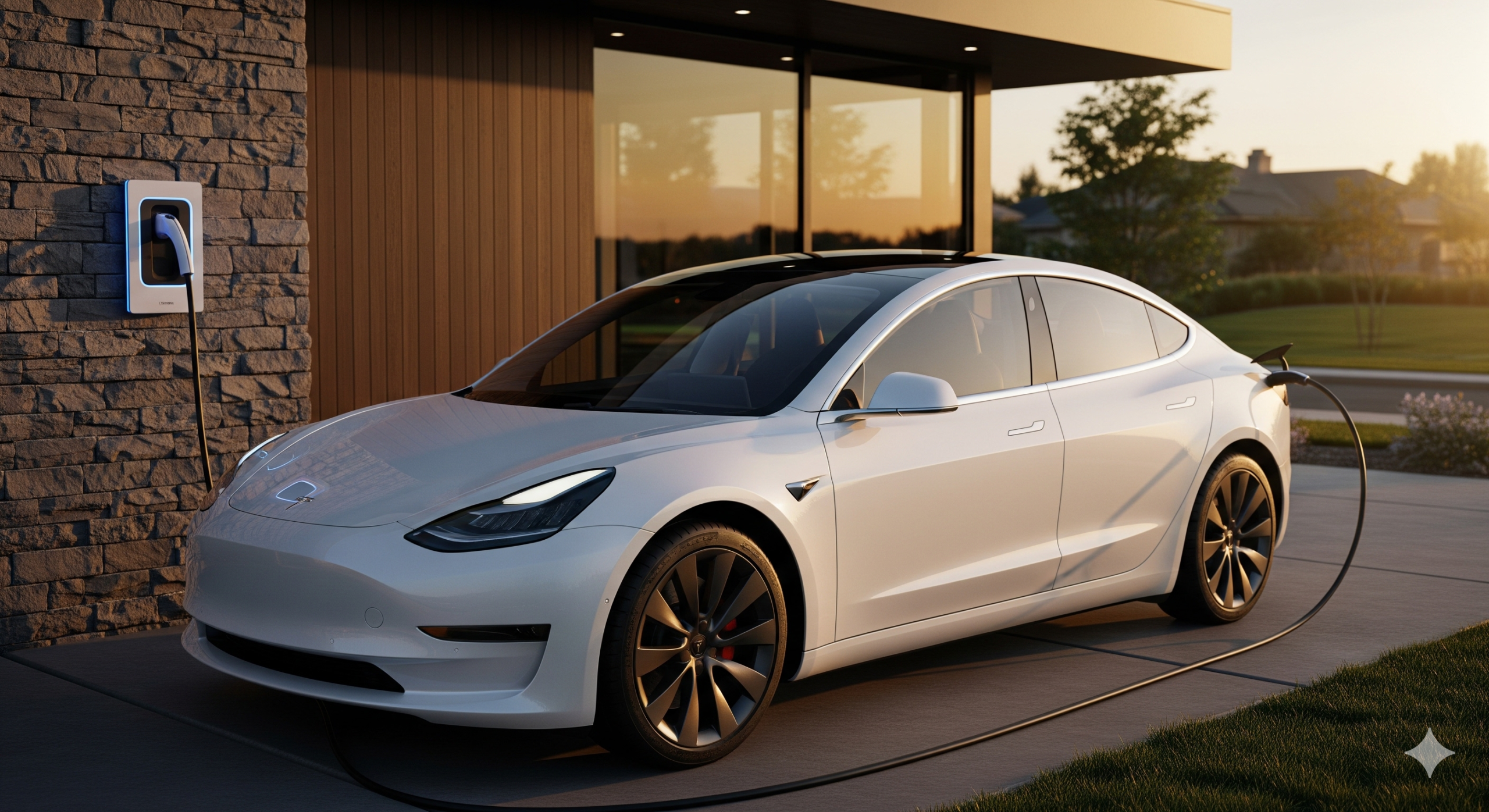
If you are eyeing a Tesla Model 3, you are likely hearing two conflicting stories. One side claims you’ll save thousands on gas and oil changes; the other warns of skyrocketing insurance premiums and “EV whiplash” depreciation.
So, is owning a Model 3 expensive? The short answer is: No, but with a major catch. While the Model 3 has some of the lowest operating costs of any vehicle in America, the “hidden” costs like insurance and depreciation can bite if you aren’t prepared.
In this expert breakdown, we analyze the 2025 total cost of ownership (TCO) to help you decide if the Model 3 is a financial win or a luxury trap.
1. Fueling vs. Charging: Where You Win Big
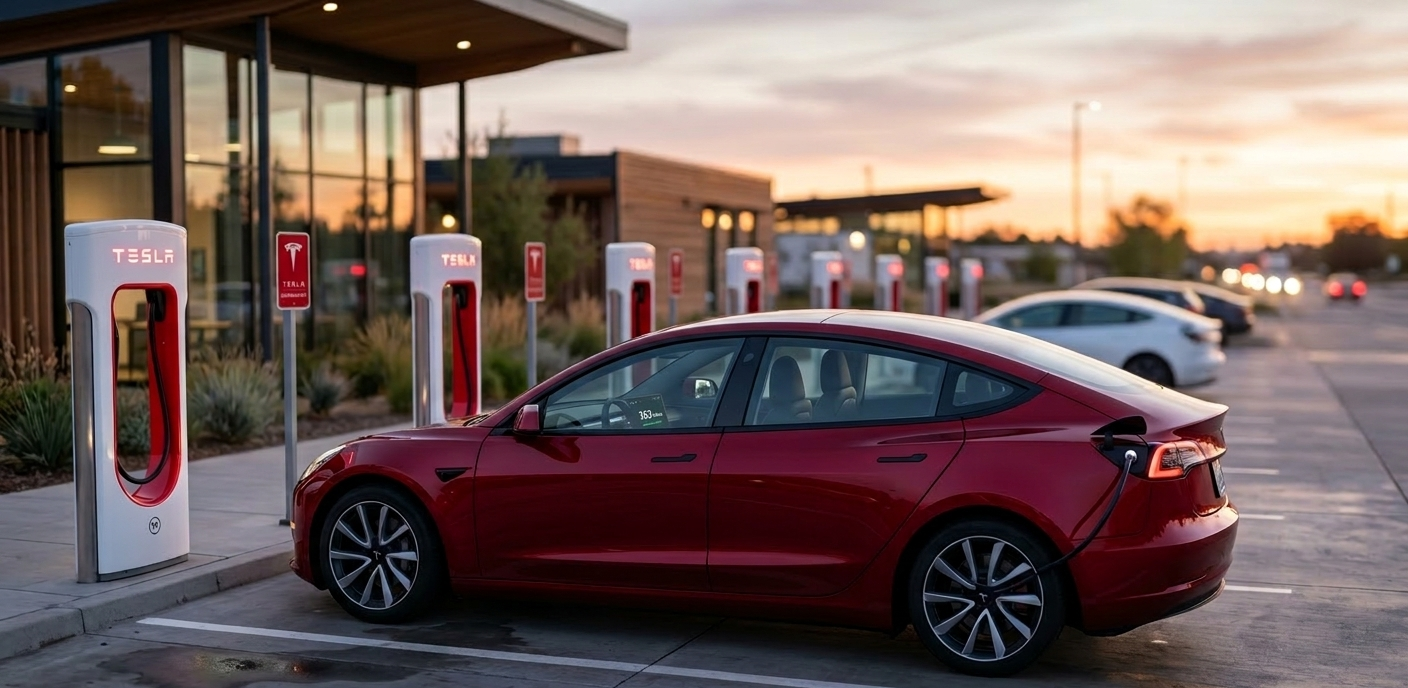
The biggest financial “win” for a Model 3 owner is at the “pump.” In 2025, gasoline prices remain volatile, while home electricity rates are relatively stable.
-
Tesla Model 3: Costs roughly $0.04–$0.06 per mile when charging at home.
-
Gasoline Sedan (30 MPG): Costs roughly $0.12–$0.15 per mile (assuming $3.80/gal).
For the average driver (12,000 miles/year), a Model 3 owner saves approximately $1,100 to $1,400 annually just on energy. Over five years, that is nearly $7,000 back in your pocket.
2. Maintenance: 60% Cheaper Than Gas Cars
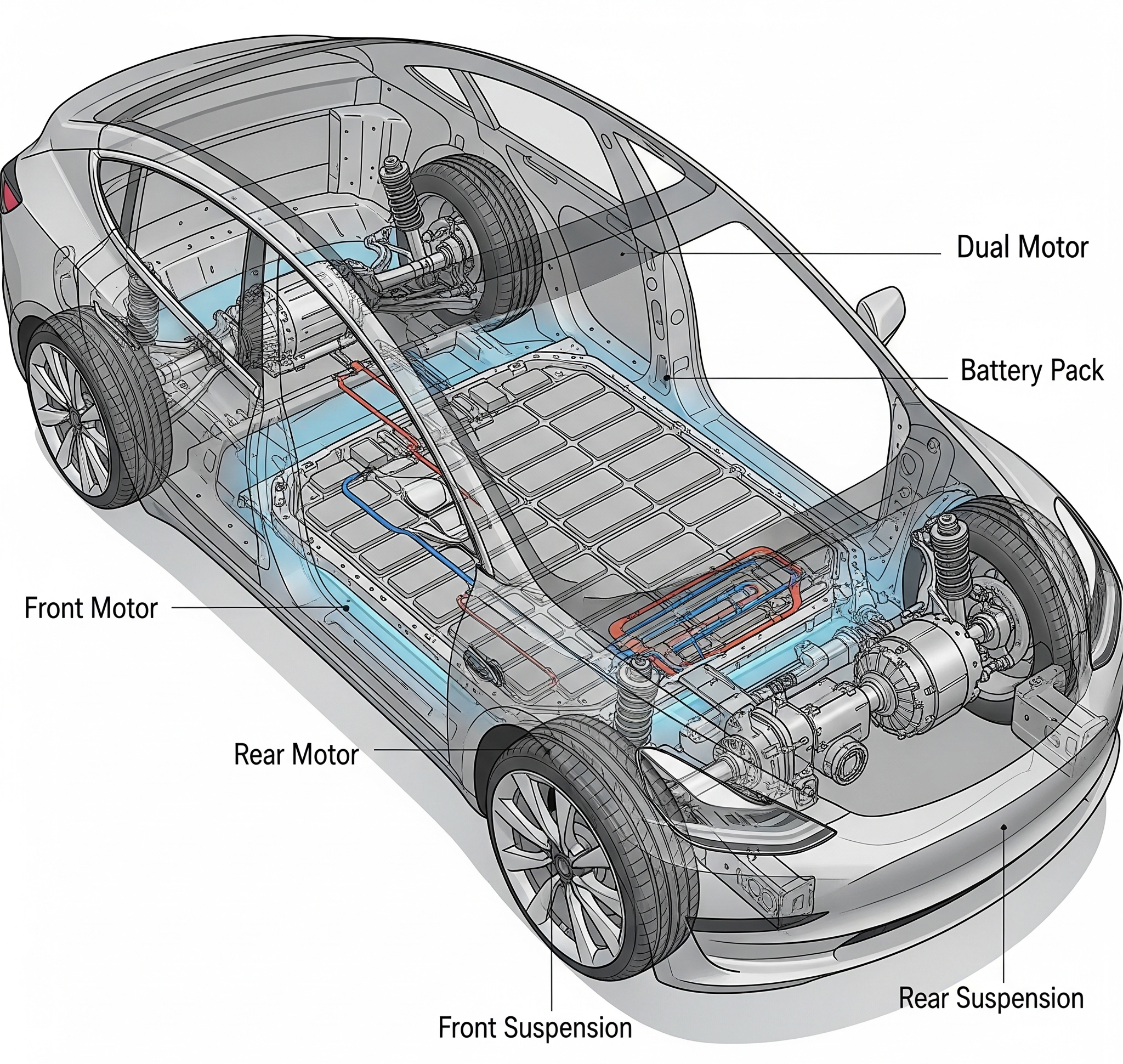
Internal Combustion Engine (ICE) vehicles have thousands of moving parts. A Tesla Model 3 has about 20. This simplicity translates to massive savings.
The “Tire Tax”: The one area where maintenance is more expensive? Tires. Because of the Model 3’s heavy battery and instant torque, you may need new tires 20% sooner than a standard car. Budget roughly $900–$1,200 every 30,000 miles.
3. The “Hidden” Costs: Insurance & Depreciation
This is where the “is it expensive” question gets tricky.
Insurance Premiums
Teslas are notoriously expensive to insure. Because they require specialized technicians and expensive parts (like the panoramic glass roof), premiums for a Model 3 are often 20% to 35% higher than a Honda Accord or BMW 3 Series. Expect to pay between $2,100 and $2,800 per year depending on your state.
Depreciation
In previous years, Teslas held their value like gold. In 2025, the market has cooled. A new Model 3 typically loses 55%–62% of its value over 5 years. This is similar to a BMW 3 Series but steeper than a Toyota Camry.
Pro Tip: If you want to avoid the depreciation hit, buy a 3-year-old used Model 3. You let the first owner take the $20,000 loss while you reap the low-cost fuel and maintenance benefits.
4. Comparison: Model 3 vs. The Competition
How does it stack up against its main rivals in a 5-year Total Cost of Ownership (TCO) study?
Note: Estimates include depreciation, fuel/electricity, insurance, and maintenance.
The Verdict: Is it worth it?
Owning a Model 3 is not expensive compared to other luxury sedans. In fact, it is one of the most cost-effective vehicles in the premium segment. However, it is more expensive than a budget hybrid (like a Camry or Prius) due to insurance and depreciation.
It’s a “Financial Win” if:
-
You can charge at home (Supercharging is 3x more expensive).
-
You drive more than 12,000 miles a year.
-
You qualify for the $7,500 Federal Tax Credit.
Frequently Asked Questions (FAQs)
Does the Tesla Model 3 require an annual service?
No. Unlike gas cars, Tesla does not require annual maintenance. You only need to check tire pressure, replace cabin filters every 2 years, and test brake fluid every 4 years.
How much does it cost to replace a Tesla Model 3 battery?
Battery replacements are rare but expensive, typically costing between $12,000 and $16,000. However, Tesla’s warranty covers the battery for 8 years or 100,000 to 120,000 miles (whichever comes first).
Is insurance for a Model 3 higher than a BMW?
Yes, usually. Because of the advanced sensors and aluminum bodywork, repair costs are higher, which leads insurers to charge higher premiums compared to traditional luxury brands.
How much do I save on gas per month with a Model 3?
The average driver saves between $80 and $120 per month in fuel costs, assuming they do at least 80% of their charging at home.





Leave a Reply