

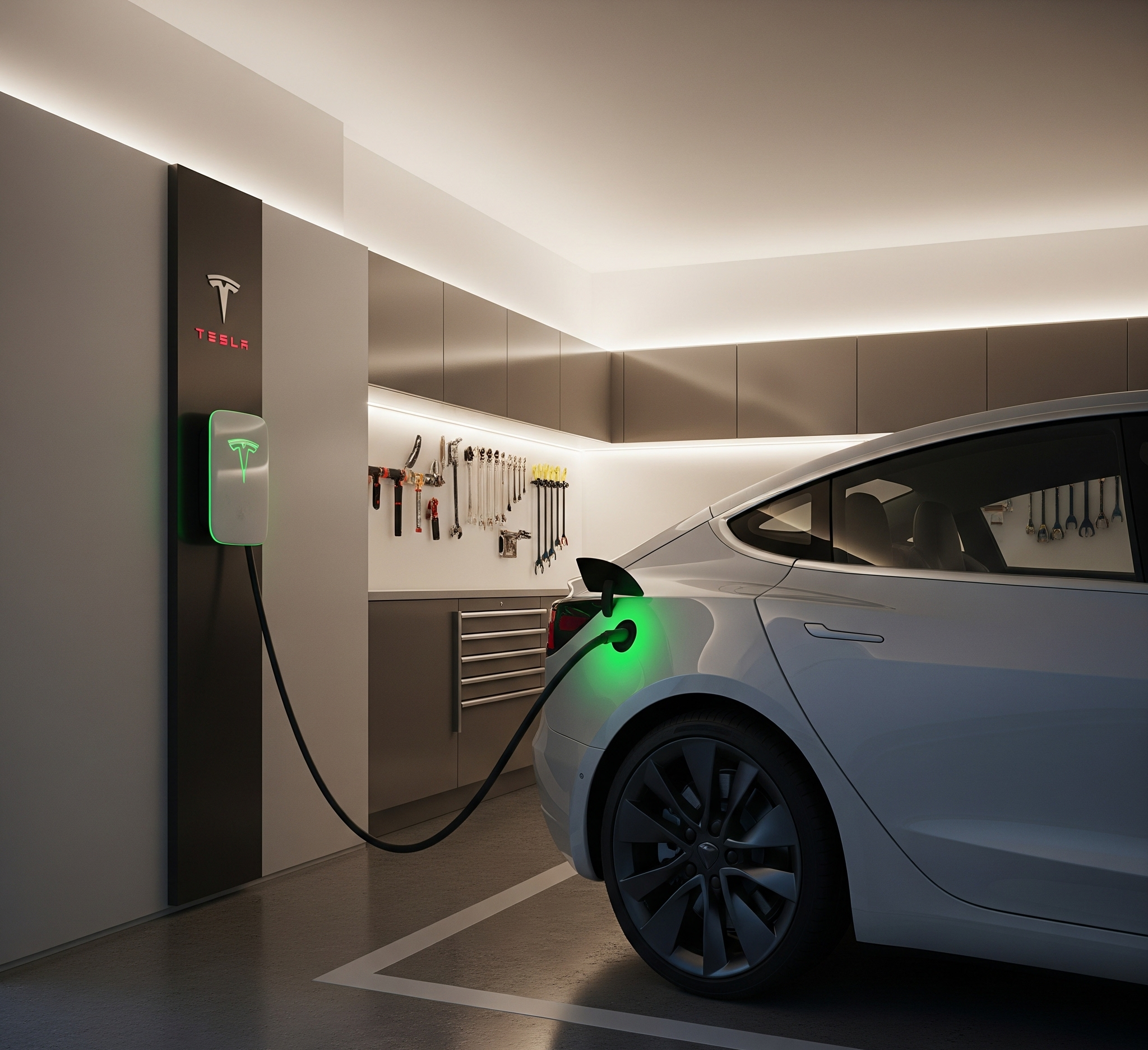
Owning a Tesla Model 3 is a revolutionary experience, but for new owners, the first question is always: “What kind of charger do I actually need?” Unlike traditional gas cars, your “fueling” strategy for a Tesla changes depending on whether you are at home, at work, or on a cross-country road trip. In this guide, we break down every charging option—from standard wall outlets to ultra-fast Superchargers—to ensure your Model 3 is always ready to go.
1. The Home Charging King: Level 2 (240V)
For 90% of Tesla Model 3 owners, a Level 2 charger is the gold standard. It uses a 240-volt outlet (the same type used by large appliances like clothes dryers).
The Tesla Wall Connector
This is the most popular choice for home installation.
-
Speed: Adds up to 44 miles of range per hour.
-
Power: Can deliver up to 11.5 kW (48 amps) for Performance/Long Range models or 7.7 kW (32 amps) for Rear-Wheel Drive.
-
Why it’s the best: It’s hardwired, weatherproof, and features a sleek design that matches your Tesla.
The Tesla Mobile Connector (with Adapter)
Previously included with every car, the Mobile Connector is now a separate purchase but highly versatile. By using a NEMA 14-50 adapter, you can plug it into a 240V outlet and get speeds nearly as fast as the Wall Connector.
2. The Emergency Backup: Level 1 (120V)
Every Tesla Model 3 can charge from a standard three-prong household outlet (Level 1).
-
Speed: Adds roughly 3–4 miles of range per hour.
-
Best for: Overnight “top-ups” if you have a very short commute or in emergency situations where no other power source is available.
-
Warning: A full charge from 0% could take over 4 days using this method!
3. Road Trip Essential: Level 3 (DC Fast Charging)
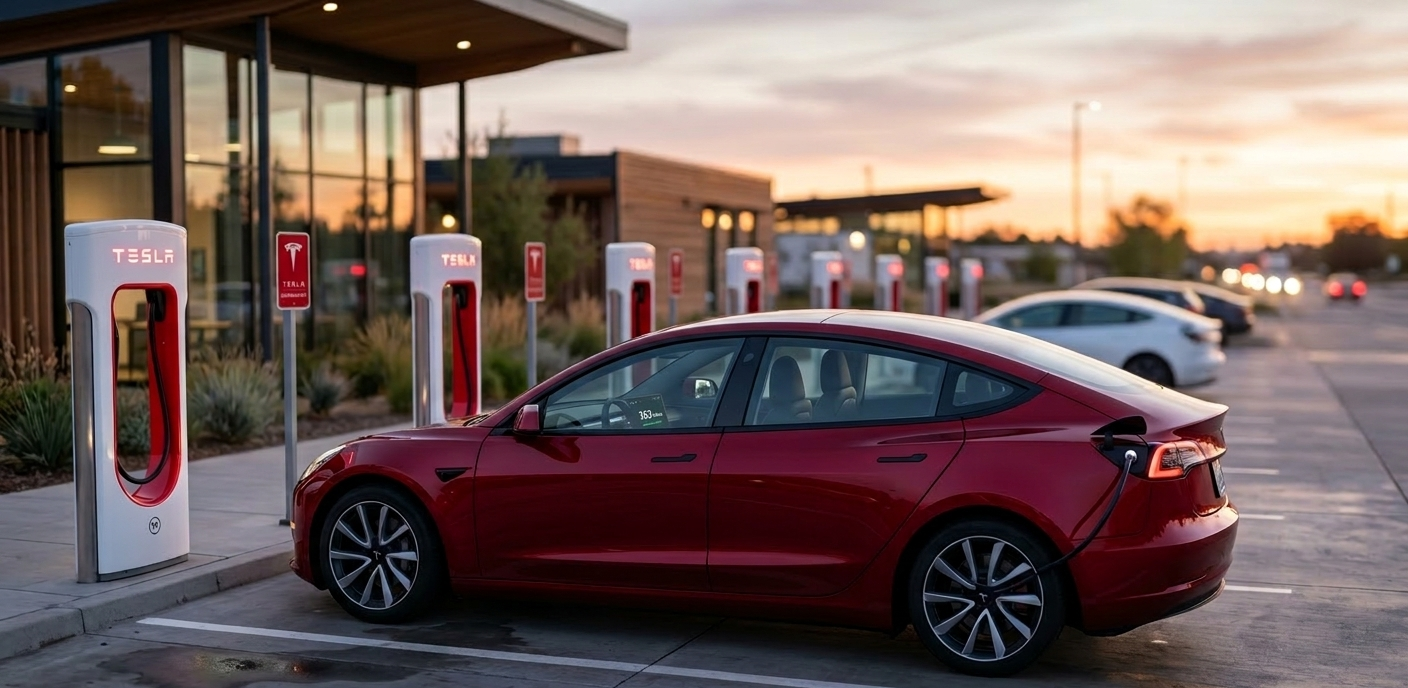
When you’re away from home, you’ll use Level 3 chargers, more commonly known as Tesla Superchargers.
-
Connector Type: In North America, the Model 3 uses the NACS (North American Charging Standard) connector. In Europe, it uses CCS2.
-
Speed: V3 and V4 Superchargers can provide up to 250 kW, adding 175–200 miles of range in just 15 minutes.
-
Automation: The car automatically preconditions the battery for the fastest possible charge when you navigate to a Supercharger using the built-in GPS.
4. Adapters: Charging at Non-Tesla Stations
If you find yourself at a public charging station (like ChargePoint or Electrify America), you may need an adapter:
-
J1772 Adapter: Usually included with your Tesla, this allows you to use standard non-Tesla Level 2 chargers.
-
CCS to NACS Adapter: Necessary if you want to use non-Tesla “Fast Chargers” (Level 3) in North America.
Technical Specifications Table: Model 3 Charging Speeds
| Charger Type | Voltage | Range Added per Hour | Best Use Case |
| Standard Outlet (L1) | 120V | 3-5 miles | Emergencies / Very Low Mileage |
| Tesla Wall Connector (L2) | 240V | 30-44 miles | Daily Home Charging |
| NEMA 14-50 (L2) | 240V | 25-30 miles | Portable / RV Parks |
| Supercharger (L3) | 480V+ | 1,000+ miles (peak) | Long Distance Travel |
Summary: Which One Should You Buy?
If you can install a Tesla Wall Connector at home, do it. It provides the most seamless experience. If you are a renter or move frequently, the Mobile Connector with a NEMA 14-50 adapter is the perfect middle ground.
Frequently Asked Questions (FAQs)
Does the Tesla Model 3 come with a charger?
As of 2022, Tesla no longer includes the Mobile Connector kit with new vehicle purchases. You must order it separately from the Tesla Shop.
Can I charge my Tesla Model 3 in the rain?
Yes. Tesla’s charging ports and connectors are designed to be weatherproof and safe to use in rain, snow, or sleet.
Should I charge my Model 3 to 100% every night?
For the Model 3 Rear-Wheel Drive (LFP battery), Tesla recommends charging to 100% at least once a week. For Long Range and Performance models, it is better to keep the daily limit at 80% to preserve battery health.
What is the “NACS” connector?
NACS stands for North American Charging Standard. It is the proprietary Tesla plug that has now been adopted by almost all other major automakers in North America.




Leave a Reply