

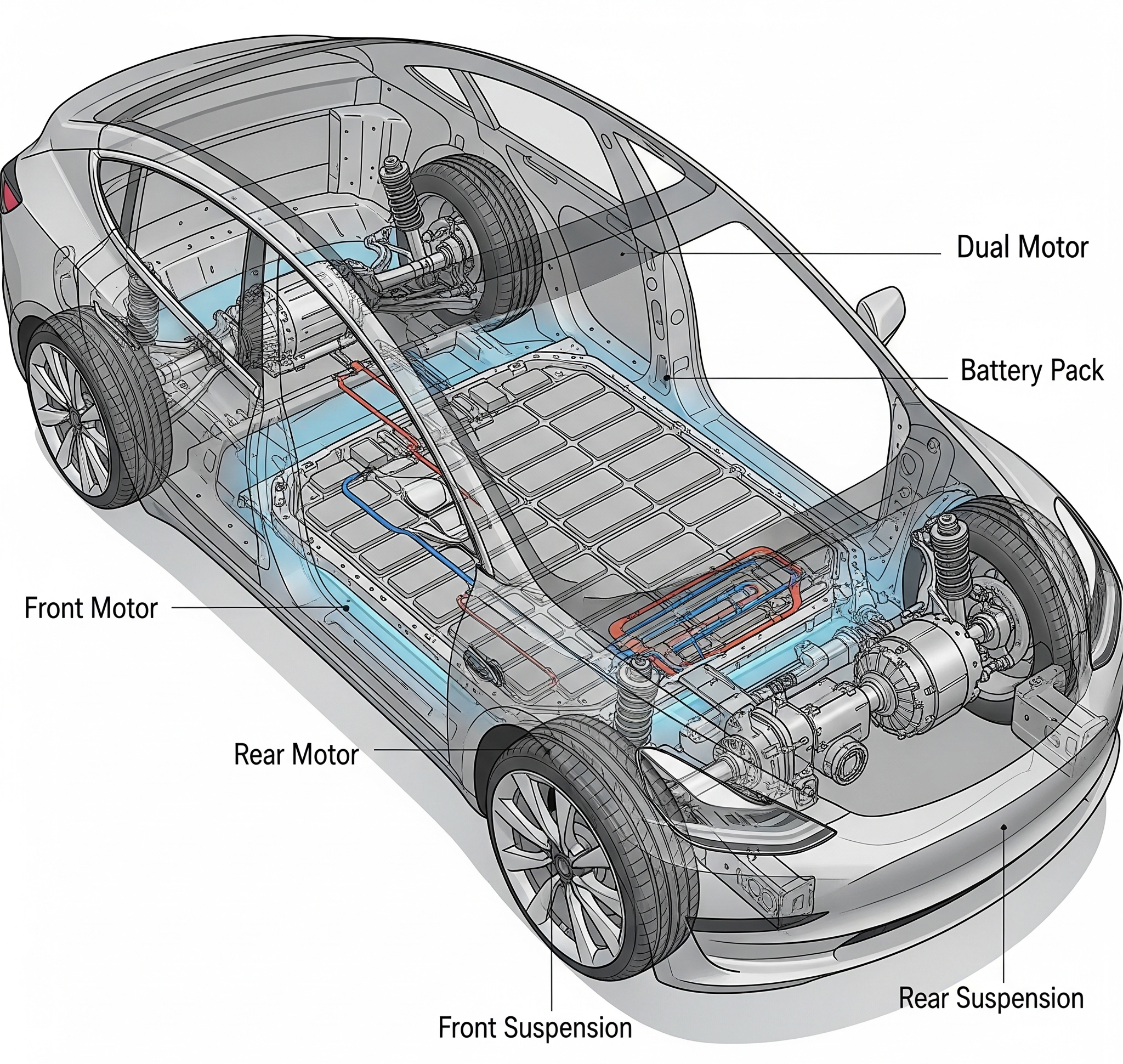
If you are shopping for a Tesla Model 3, you’ve likely encountered the term “Dual Motor.” But does every Model 3 come with two motors, or is it a premium upgrade?
The short answer is: Yes, the Tesla Model 3 has dual motors, but only on specific trims. While the entry-level Model 3 uses a single-motor setup, the Long Range and Performance variants are equipped with Tesla’s advanced Dual Motor All-Wheel Drive (AWD) system. In this guide, we’ll break down how these motors work, which models have them, and whether the upgrade is worth it for your driving needs.
Which Tesla Model 3 Models Have Dual Motors?
Tesla currently offers the Model 3 (often referred to by enthusiasts as the “Highland” refresh) in three primary configurations. The drivetrain is the biggest differentiator between them:
-
Model 3 Rear-Wheel Drive (RWD): Single Motor (Rear).
-
Model 3 Long Range AWD: Dual Motor (Front & Rear).
-
Model 3 Performance AWD: Dual Motor (Front & Rear, High-Output).
How the Dual Motor System Works
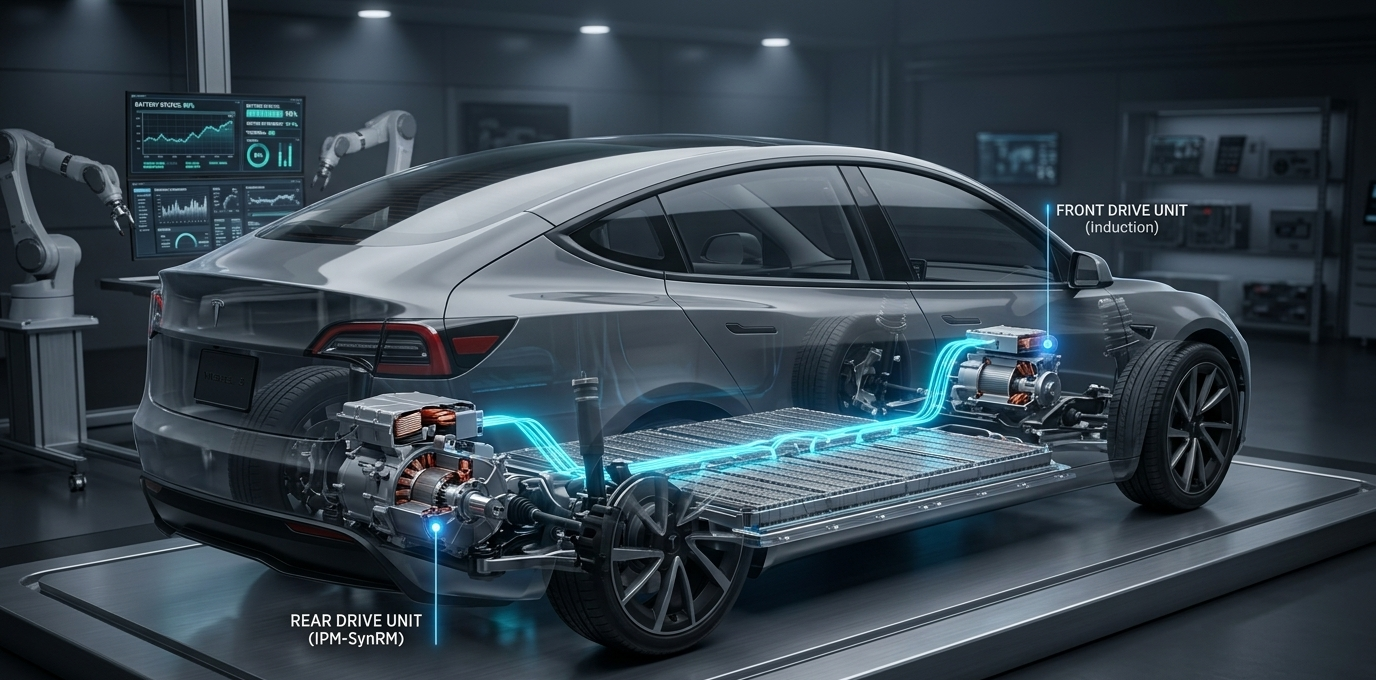
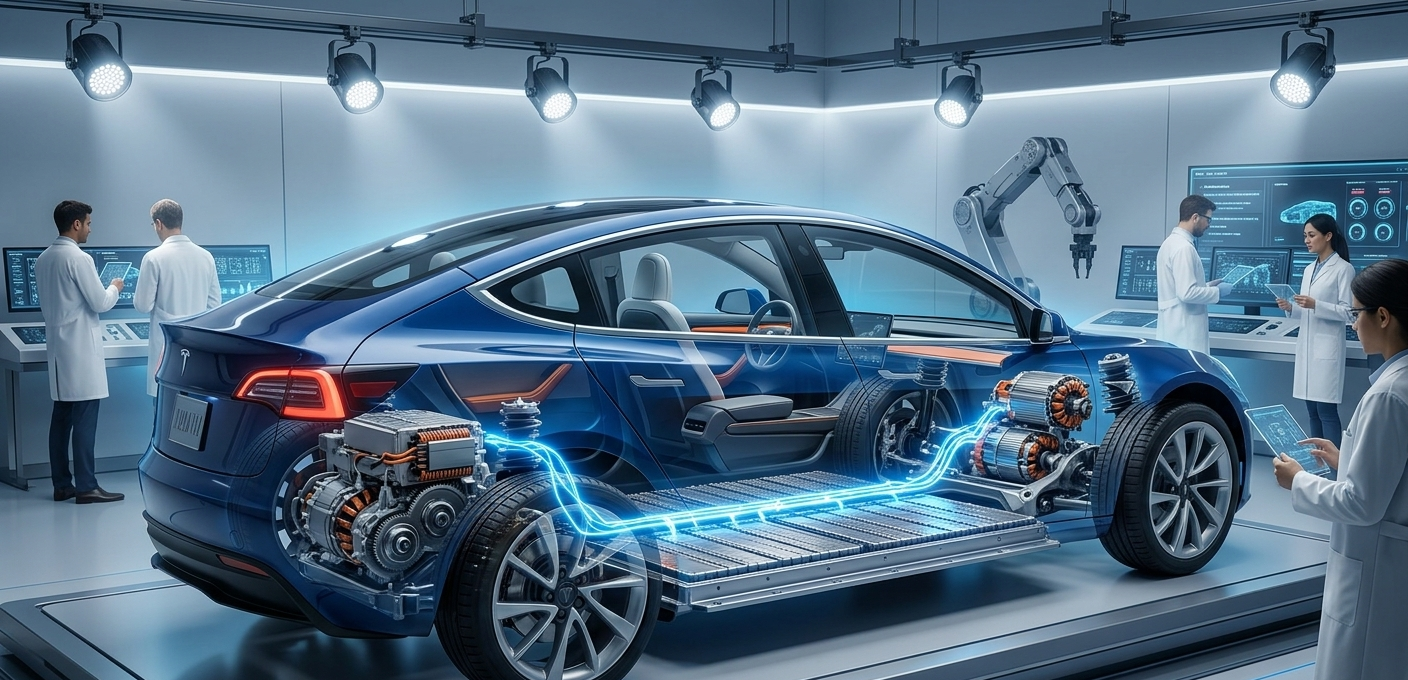
Unlike traditional internal combustion engine (ICE) cars that use a heavy driveshaft to connect a single engine to all four wheels, Tesla’s Dual Motor system uses two independent electric motors.
One motor is positioned on the front axle, and the other is on the rear. These motors are digitally controlled by Tesla’s onboard computer, which adjusts torque to the front and rear wheels in as little as 10 milliseconds. This instantaneous “torque sleep” or power distribution ensures maximum traction even if one set of wheels begins to slip.
Dual Motor AWD vs. Single Motor RWD: Key Differences
| Feature | Model 3 RWD (Single Motor) | Model 3 Long Range (Dual Motor) | Model 3 Performance (Dual Motor) |
| 0-60 MPH | 5.8 Seconds | 4.2 Seconds | 2.9 Seconds |
| Drivetrain | Rear-Wheel Drive | All-Wheel Drive | All-Wheel Drive |
| Top Speed | 125 mph | 125 mph | 163 mph |
| Battery Tech | LFP (Lithium Iron Phosphate) | NMC (Nickel Manganese Cobalt) | NMC (Nickel Manganese Cobalt) |
| Best For | City Commuting & Efficiency | Road Trips & All-Weather | Track Days & Speed Enthusiasts |
1. Performance and Acceleration
The most immediate difference is the “punch.” By adding a second motor to the front axle, the Model 3 Long Range drops its 0-60 mph time significantly compared to the RWD. If you opt for the Performance trim, the dual motors are tuned for massive power, reaching 60 mph in a blistering 2.9 seconds—faster than many six-figure supercars.
2. All-Weather Traction
If you live in an area with snow, ice, or heavy rain, the Dual Motor AWD is a game-changer. While Tesla’s RWD traction control is excellent, having power delivered to all four wheels provides superior stability when climbing hills or accelerating out of slippery corners.
3. Range and Battery Chemistry
Interestingly, the Dual Motor models don’t just add a motor; they also feature a larger battery pack.
-
The RWD uses an LFP battery, which is durable and can be charged to 100% daily without significant degradation.
-
The Dual Motor variants use NMC batteries. These are more energy-dense, providing the “Long Range” capability, though Tesla typically recommends charging to 80% or 90% for daily use to preserve battery health.
Is the Dual Motor Worth the Extra Cost?
Choosing between a single motor and a dual motor depends on your lifestyle:
-
Choose the Single Motor (RWD) if: You primarily commute in a city with a mild climate, prioritize value, and want a battery (LFP) that you can charge to 100% every single day.
-
Choose the Dual Motor (AWD) if: You frequently take long road trips, live in a snowy climate, or simply want that signature “Tesla thrust” that makes merging onto highways effortless.
Frequently Asked Questions (FAQs)
Can I add a second motor to my RWD Model 3 later?
No. The Dual Motor system is integrated into the chassis and wiring of the car at the factory. It is not possible to retrofit a second motor into a Rear-Wheel Drive model.
Does the Dual Motor Model 3 require more maintenance?
Surprisingly, no. Because electric motors have very few moving parts, having two motors doesn’t significantly increase maintenance costs compared to one. Most “maintenance” on a Tesla involves tires, cabin filters, and windshield wiper fluid.
How do I know if my Model 3 is Dual Motor?
The easiest way is to look at the trunk. Dual Motor models usually feature a “Dual Motor” badge (often underlined in the Performance version). You can also check the “Software” tab on the vehicle’s touchscreen, which lists the exact trim and motor configuration.

Leave a Reply