

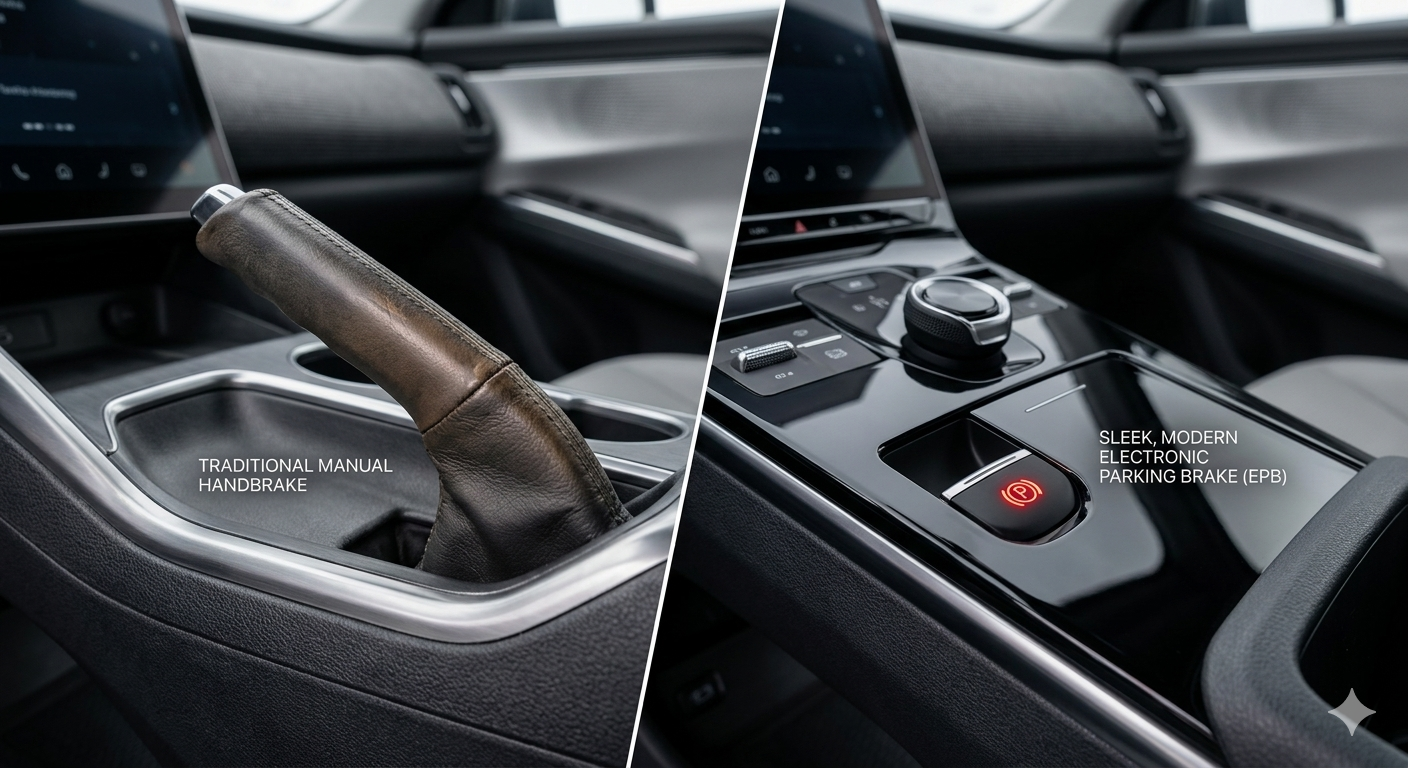
The short answer is yes, in practically all modern passenger vehicles, the emergency brake and the parking brake refer to the exact same physical braking system.
While the terms are often used interchangeably, they describe different functions of a single backup mechanism. Understanding the technical crossover is crucial for safe vehicle operation.
Defining the Core Functions
To understand why they are the same system, it helps to understand why we have two different names for it.
1. The Parking Brake Function (Primary Use)
This is the system’s everyday role. Its purpose is to keep the vehicle stationary when it is parked, preventing it from rolling away, especially on an incline. It is a mechanical linkage (traditionally a cable) that bypasses the primary hydraulic braking system used by the foot pedal.
2. The Emergency Brake Function (Secondary Use)
This is the system’s fail-safe role. In the extremely rare event that your primary hydraulic brakes fail while driving, this separate mechanical system provides a backup method to slow and stop the vehicle.
Because this backup system is used for both parking safety and rare emergency stopping, it is called by both names.
The Evolution: Mechanical vs. Electronic Systems
The confusion often stems from how we interact with this system, which has changed dramatically with automotive technology.
Traditional Mechanical Brakes
For decades, this system was operated by a physical lever. This required manual force to pull a cable that engaged the rear brake pads or shoes.
-
Common types: A hand lever between the seats, a foot pedal on the far left, or a “pull-to-release” handle under the dashboard.
Modern Electronic Parking Brakes (EPB)
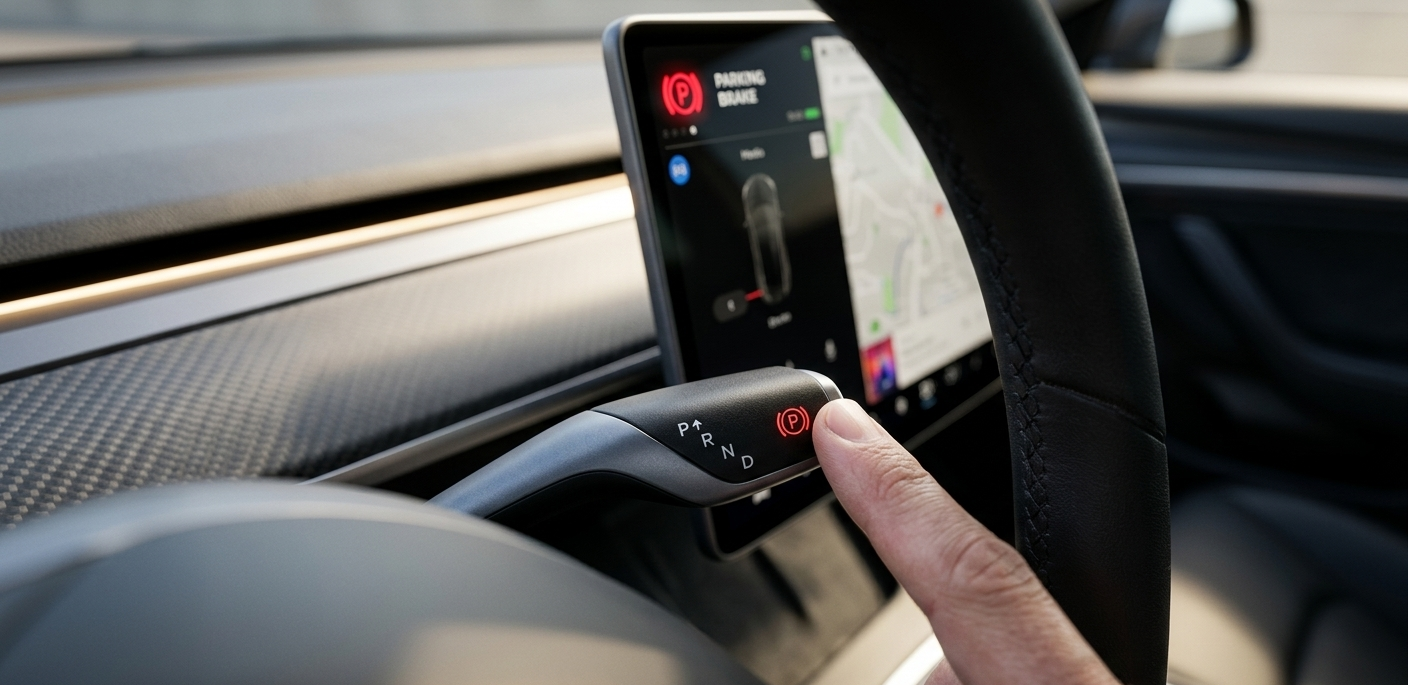
Most modern vehicles, including nearly all electric vehicles (EVs) featured on EVNextDrive, now use an Electronic Parking Brake (EPB). Instead of a mechanical lever and cable, you engage a small switch. An electric motor at the wheel caliper then clamps the brake pads down.
Even in these electronic systems, the EPB still retains the duplicate role:
-
It automatically activates when you shift to ‘Park.’
-
It serves as the emergency backup braking method (usually by holding the EPB switch while in motion).
Key Technical Differences (Summary)
| Feature | Primary Braking System (Foot Pedal) | Emergency/Parking Brake System |
| Actuation | Hydraulic (Fluid Pressure) | Mechanical (Cable or Electric Motor) |
| Wheels Affected | All Four Wheels | Typically Rear Wheels Only |
| Activation | Service Brake Pedal | Hand Lever, Foot Pedal, or Console Switch |
| Modulation | Easy to modulate (smooth stopping) | Harder to modulate (tends to lock wheels/jerk) |
Conclusion
When people ask, “Is the emergency brake the same as the parking brake?” the technical answer is yes. They are different terms for the same secondary mechanical braking system. Whether you are setting the “parking brake” on a hill or pulling the “emergency brake” in a crisis, you are activating the same backup mechanism to stop the wheels from turning.
FAQS: Common Questions Answered
Q: Can I use the parking brake while driving?
A: Only in a true emergency. Using it while driving can cause the rear wheels to lock up immediately, leading to a dangerous skid. Modern Electronic Parking Brakes often prevent accidental activation while moving, requiring a specific sustained pull to engage backup braking.
Q: Why does my car sometimes automatic ally set the parking brake?
A: Many modern vehicles, especially EVs, automatically set the Electronic Parking Brake when the transmission is shifted to ‘Park’ or if the driver’s door is opened while the vehicle is stationary, enhancing safety.
Q: Does the parking brake use brake fluid?
A: No. The defining feature of the emergency/parking brake is that it is mechanical and does not rely on the primary hydraulic fluid system. This independence is what makes it a viable backup during fluid loss or master cylinder failure.

Leave a Reply