

If you are trying to find “Jack Mode” in the settings of your standard Tesla Model 3, you can stop searching. The standard Tesla Model 3 (Rear-Wheel Drive and Long Range) does not have a Jack Mode setting in the software.
This is because “Jack Mode” is exclusively required for vehicles equipped with an Active Air Suspension system, such as the Model S and Model X. The standard Model 3 utilizes traditional coil springs. It cannot automatically level itself when the engine is off, so it does not need a software lockout before you lift it.
However, safely lifting a Model 3 requires different, and very critical, technical procedures compared to a gas car to avoid devastating damage to the high-voltage battery.
Why the Model 3 Is Different: Protecting the Battery
Unlike an internal combustion engine (ICE) vehicle, where the heaviest components (the engine and transmission) are located at the front and rear, the heaviest component of the Model 3—the battery pack—runs along the entire floor between the axles.
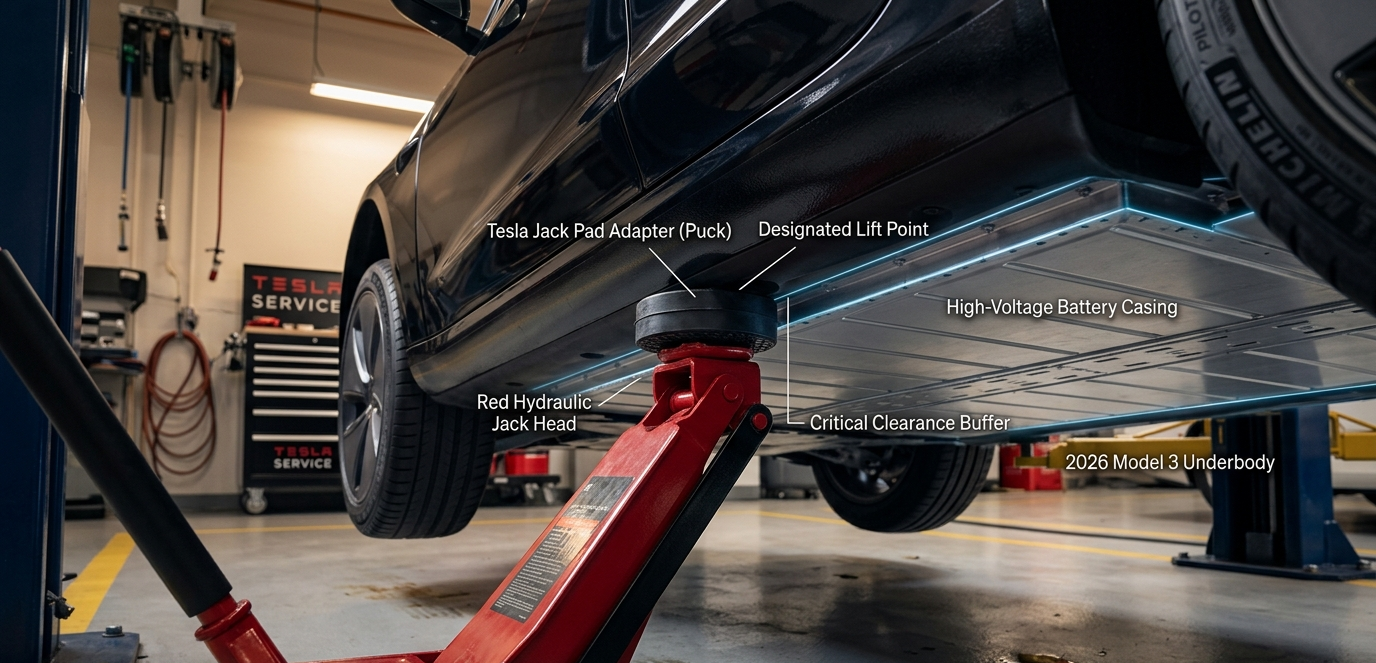
If you attempt to lift a Model 3 by placing a traditional hydraulic jack under the side frame rails without a specialized adapter, you risk crushing the battery pack’s aluminum casing. This can cause punctures, internal short circuits, and catastrophic battery fire.
The procedure below, while simple, is non-negotiable for safety.
Step-by-Step: The Correct Procedure for Lifting a Model 3
Even though there is no software “Jack Mode,” you must prepare the vehicle and your equipment strictly according to this protocol.
1. Identify the Correct Jack Points
There are exactly four designated lifting points on the underside of the Model 3, located directly behind the front wheels and in front of the rear wheels. They are marked by small circular holes in the side sill bodywork.
2. Prepare the Vehicle
-
Park: Place the vehicle on a level, solid surface. Shifting into Park automatically engages the parking brake.
-
Turn Off HVAC: Ensure the Climate Control system and Cabin Overheat Protection are turned OFF. While not strictly “Jack Mode,” you do not want the car’s computer to randomly turn on a cooling fan while you are lifting it, which could destabilize the vehicle.
-
Chock the Wheels: For maximum safety, place wheel chocks on the wheels that will remain on the ground.
3. Insert a Jack Pad Adapter (Crucial Step)
You must use a specialized Tesla Jack Pad Adapter (a puck-shaped tool, usually made of rubber). This tool inserts into the specific circular holes on the Tesla frame rail. It creates a critical 1-to-2-inch clearance buffer between the jack’s lifting surface and the battery casing.
4. Position the Jack and Lift
-
Placement: Align your hydraulic floor jack or lift arm directly under the rubber jack pad adapter.
-
Lifting: Slowly pump the jack, ensuring the adapter remains stable and centered. Never lift the vehicle by an suspension component or the battery rail itself.
Special Case: Model 3 Adaptive Suspension (2026+ Performance)
As of 2026, the Model 3 Performance now offers an optional Adaptive Suspension system.
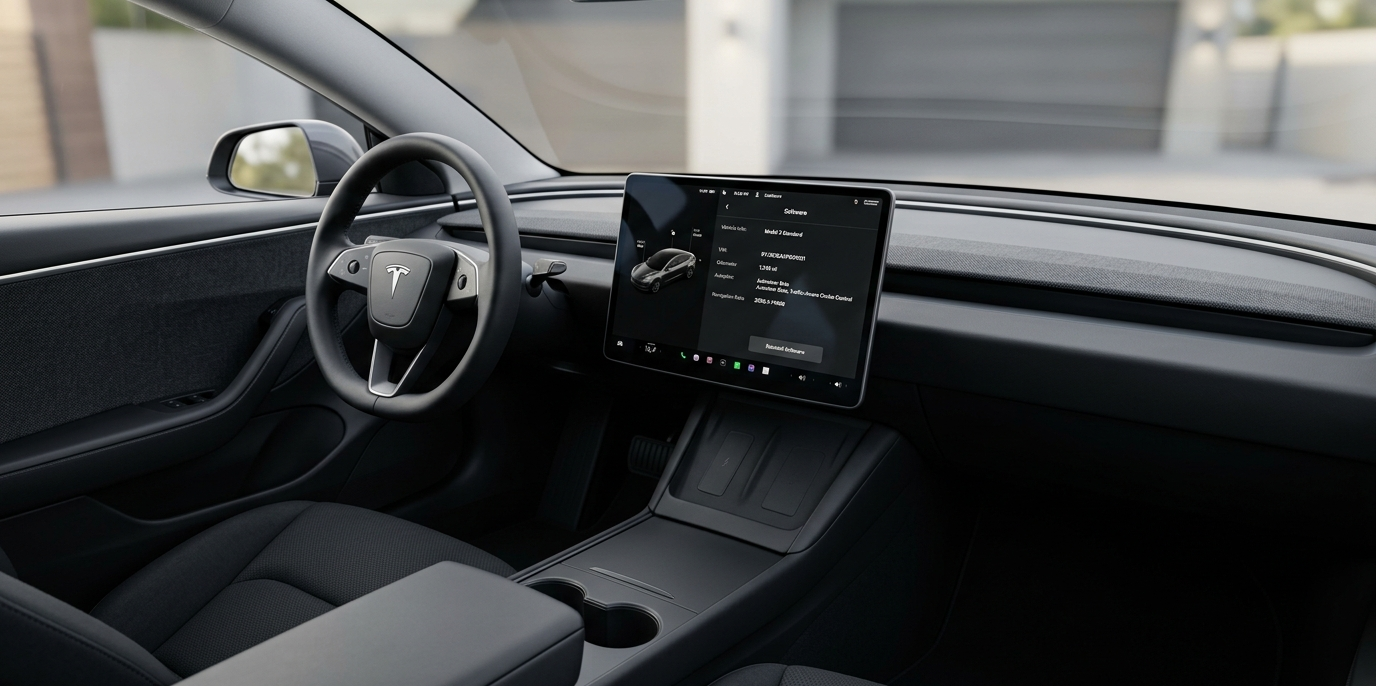
If you own a Performance variant equipped with this adaptive system, a Jack Mode setting will appear on your touchscreen under: Controls > Service > Jack Mode.
-
To Engage: You must touch and hold “Jack Mode” until it is active. This disables self-leveling.
-
To Disengage: Simply drive the vehicle over 15 mph, or return to the menu and turn it off.
FAQS: Lifting and Servicing your Model 3
Q: Where can I buy Tesla Jack Pad Adapters?
A: They are available from numerous third-party retailers online. They are typically sold as a kit of four pucks and are highly recommended to be kept in the car for emergency roadside use (e.g., if a tow truck driver is unfamiliar with Teslas).
Q: Do I need Jack Mode to change a tire on a standard Model 3?
A: No software Jack Mode is needed. You only need to follow the mechanical safety protocol using jack pads on a level surface.
Q: What happens if I jack up a standard Model 3 without a Jack Pad puck?
A: You will likely crush the decorative plastic side sill, and more importantly, risk structural damage to the high-voltage battery casing. This is considered “customer abuse” and voids the warranty on the entire battery pack. Repair costs can easily exceed $15,000.









Leave a Reply