

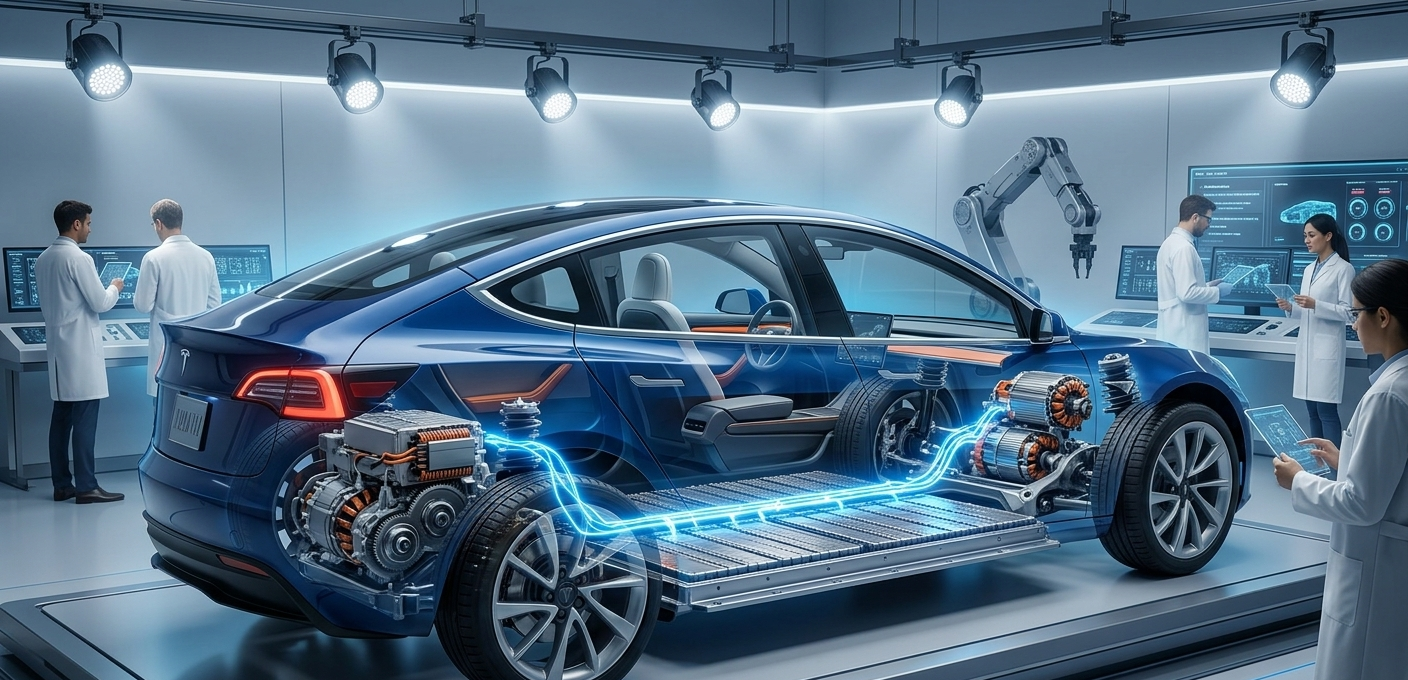
To be technically accurate, the Tesla Model 3 does not have an “engine.” Instead, it is powered by high-efficiency electric motors. While internal combustion engines (ICE) rely on small explosions and pistons, Tesla’s electric drivetrain uses magnetism to generate instant torque and silent power.
However, not all Tesla motors are the same. Depending on which Model 3 you drive, you are actually utilizing two very different types of electromagnetic technology.
1. The Primary Rear Motor: The IPM-SynRM
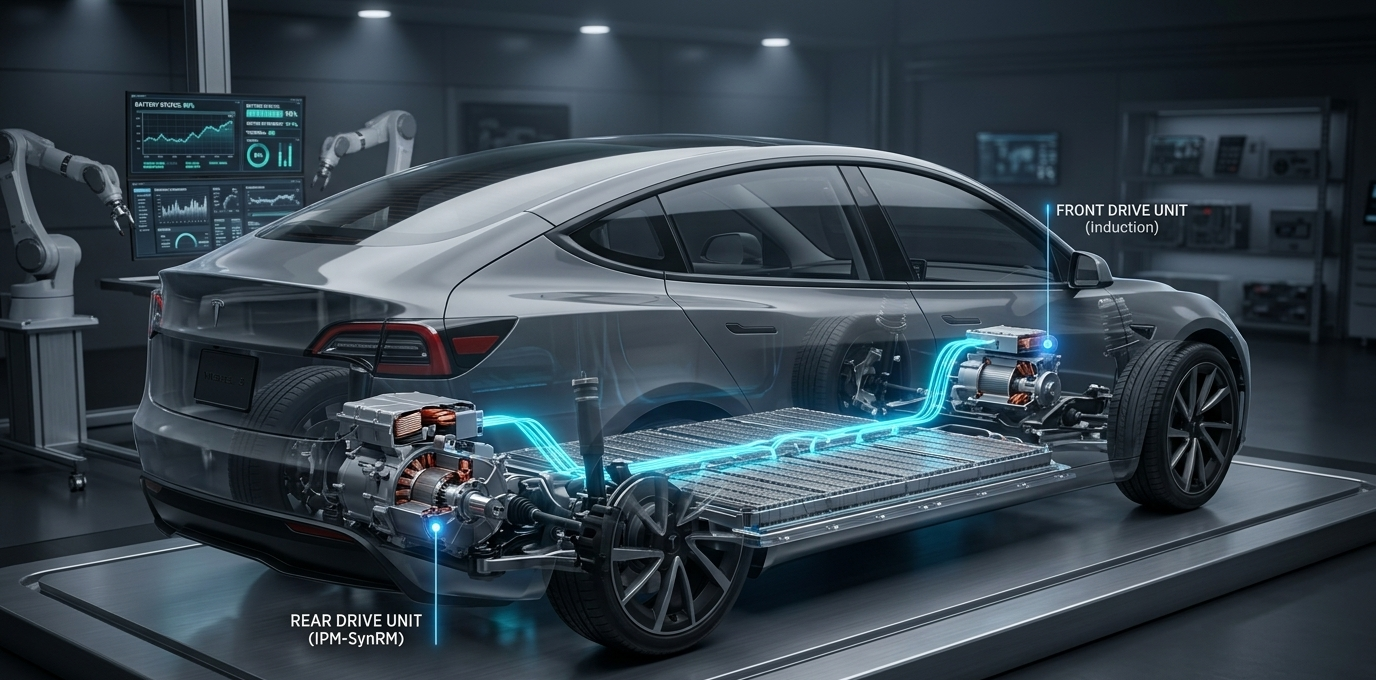
Every Tesla Model 3 (Rear-Wheel Drive, Long Range, and Performance) uses a state-of-the-art motor on the rear axle. Tesla engineers developed a hybrid design specifically for this car called the Internal Permanent Magnet Synchronous Reluctance Motor (IPM-SynRM).
-
How it works: It combines powerful neodymium magnets with a specialized “reluctance” rotor design.
-
The Benefit: This hybrid approach solves a common EV problem. The magnets provide massive torque at low speeds (for quick starts), while the “reluctance” technology allows the motor to remain highly efficient at high highway speeds without overheating.
2. The Front Motor: The AC Induction Motor
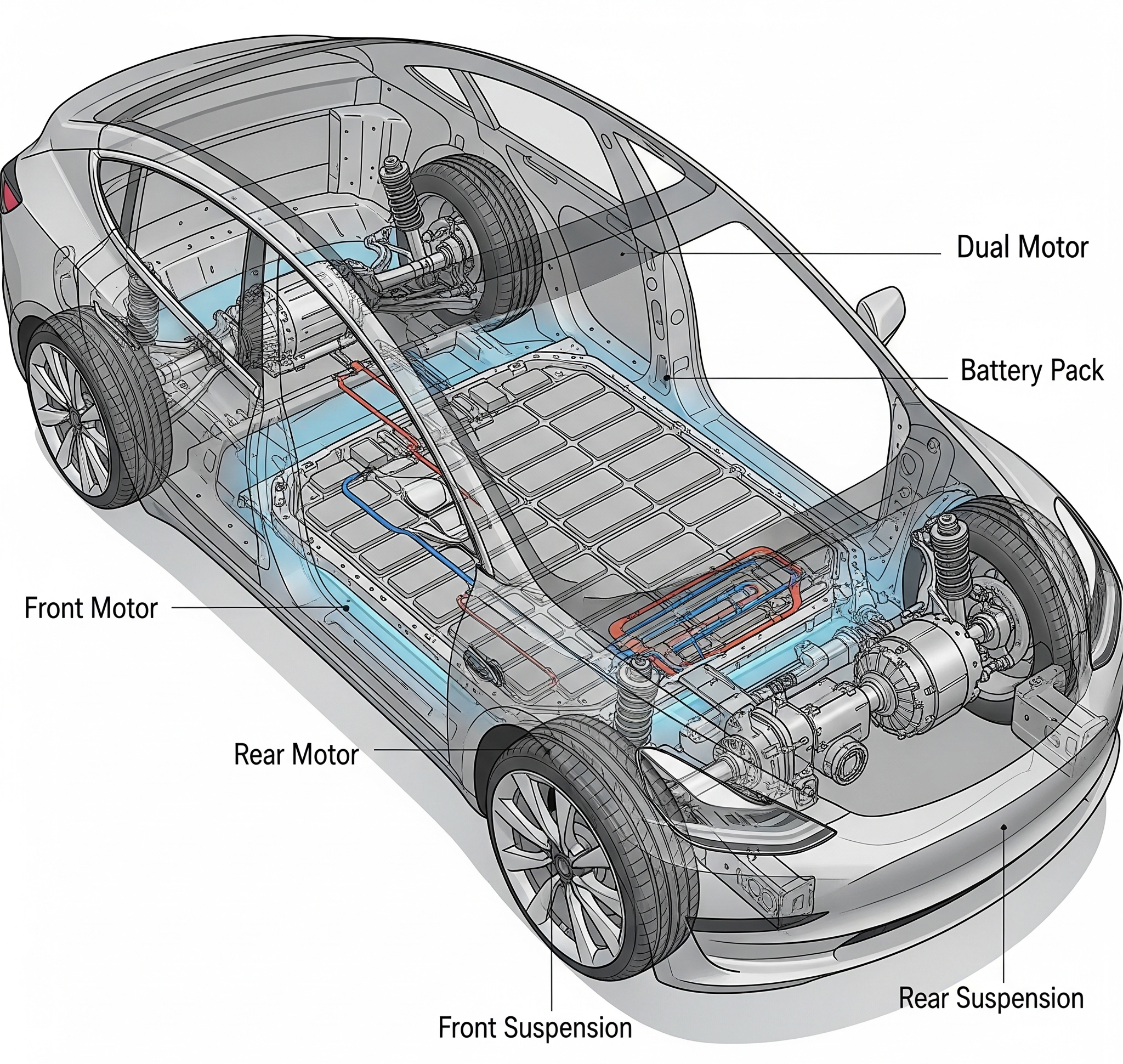
If you have a Long Range AWD or Performance model, you have a second motor located between the front wheels. Interestingly, this motor uses a completely different technology: the AC Induction Motor.
-
Why use two different types? Unlike the rear motor, an induction motor does not use permanent magnets. This means when you are just cruising on the highway, the car can completely “turn off” the front motor to save energy, allowing it to freewheel without any magnetic drag.
-
The Result: You get the grip of All-Wheel Drive when you need it, but the efficiency of a single-motor car when you don’t.
Tesla Model 3 Motor Specs (2026 Model Year)
| Model 3 Variant | Motor Configuration | Total Horsepower | 0–60 MPH |
| Rear-Wheel Drive | Single Rear (IPM-SynRM) | ~272 hp | 5.8 sec |
| Long Range AWD | Dual Motor (Induction + IPM) | ~498 hp | 4.2 sec |
| Performance | Dual Motor (High-Output) | ~510 hp | 2.9 sec |
Key Differences from a Gas Engine
-
No Transmission Gears: While gas cars have 6 to 10 gears, a Tesla uses a single-speed fixed gear (9:1 ratio). It never needs to “shift.”
-
Instant Torque: An engine has to “rev up” to reach its power. A Tesla motor delivers 100% of its torque the millisecond you touch the pedal.
-
Maintenance: There are no spark plugs, oil filters, timing belts, or valves. The only “fluid” in a Tesla motor is a specialized oil used for cooling and lubrication, which is designed to last the life of the vehicle.
FAQs: Common Tesla Motor Questions
Q: Does a Tesla have a 4-cylinder or 6-cylinder engine?
A: Neither. It has zero cylinders. It uses copper-wound stators and magnetic rotors to create motion through electromagnetism.
Q: Where is the motor located?
A: The motors are tucked between the wheels on the axles. This low placement gives the Model 3 a very low center of gravity, which is why it handles like a sports car.
Q: Can the motor wear out?
A: Tesla motors are designed for a million-mile life cycle. Because there are very few moving parts compared to a gas engine, mechanical failure is extremely rare.



Leave a Reply